Women - Women(2008)
Thursday, September 11, 2008
Saturday, August 23, 2008
Modern Pop Percussion
Organ
Fill my being
Expand my horizons and bring forth
ever expanding glimpses into the void
the void that is my "soul"
the event horizon
witnessed only from a peak where you can see
what Eratosthenes already knew to be true
Qu'est ce qu'il y a?
Ca ne fait rien.
Qu'est ce quise passe?
Je n'ai aucune idee.
Je suis fatigue.
J'ai faim.
J'ai soif.
J'ai chuad.
J'ai froid.
Je m'ennuie.
Ca n'est egal.
Ne t'en fais pas.
J'ai oublie.
Je dois y aller.
Fill my being
Expand my horizons and bring forth
ever expanding glimpses into the void
the void that is my "soul"
the event horizon
witnessed only from a peak where you can see
what Eratosthenes already knew to be true
Qu'est ce qu'il y a?
Ca ne fait rien.
Qu'est ce quise passe?
Je n'ai aucune idee.
Je suis fatigue.
J'ai faim.
J'ai soif.
J'ai chuad.
J'ai froid.
Je m'ennuie.
Ca n'est egal.
Ne t'en fais pas.
J'ai oublie.
Je dois y aller.
Digging my lawn
Toru Takemitsu (Played by Jim O'Rourke) - Tokyo Realization

(2006) Toru Takemitsu (Played by Jim O'Rourke) - Tokyo Realization / 197 VBR
(aka 'Translate Takemitsu')
Try the album here.
Japanese-only release of two performances of Toru Takemitsu's 1962 composition "Corona", performed by Jim O'Rourke. "Toru Takemitsu (1931-1996) was a self-taught Japanese composer who combined elements of Eastern and Western music and philosophy to create a unique sound world. Some of his early influences were the sonorities of Debussy, and Messiaen's use of nature imagery and modal scales. There is a certain influence of Webern in Takemitsu's use of silence, and Cage in his compositional philosophy, but his overall style is uniquely his own. Takemitsu believed in music as a means of ordering or contextualizing everyday sound in order to make it meaningful or comprehensible. His philosophy of "sound as life" lay behind his incorporation of natural sounds, as well as his desire to juxtapose and reconcile opposing elements such as Orient and Occident, sound and silence, and tradition and innovation. From the beginning, Takemitsu wrote highly experimental music involving improvisation, graphic notation, unusual combinations of instruments and recorded sounds. The result is music of great beauty and originality. It is usually slowly paced and quiet, but also capable of great intensity. The variety, quantity and consistency of Takemitsu's output are remarkable considering that he never worked within any kind of conventional framework or genre. In addition to the several hundred independent works of music, he scored over ninety films and published twenty books."-Steven Coburn, All Music
1. Corona for Pianist(s) Written by Toru Takemitsu: Tokyo Realizaton 1 (26:19)
2. Corona for Pianist(s) Written by Toru Takemitsu: Tokyo Realizaton 2 (25:05)
Tim Hecker - Haunt Me, Haunt Me, Do It Again

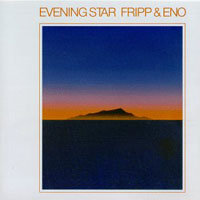
Fripp & Eno - Evening Star

Jesu And Eluvium Split (2007)
psw:www.mediaportal.ru

(2006) Toru Takemitsu (Played by Jim O'Rourke) - Tokyo Realization / 197 VBR
(aka 'Translate Takemitsu')
Try the album here.
Japanese-only release of two performances of Toru Takemitsu's 1962 composition "Corona", performed by Jim O'Rourke. "Toru Takemitsu (1931-1996) was a self-taught Japanese composer who combined elements of Eastern and Western music and philosophy to create a unique sound world. Some of his early influences were the sonorities of Debussy, and Messiaen's use of nature imagery and modal scales. There is a certain influence of Webern in Takemitsu's use of silence, and Cage in his compositional philosophy, but his overall style is uniquely his own. Takemitsu believed in music as a means of ordering or contextualizing everyday sound in order to make it meaningful or comprehensible. His philosophy of "sound as life" lay behind his incorporation of natural sounds, as well as his desire to juxtapose and reconcile opposing elements such as Orient and Occident, sound and silence, and tradition and innovation. From the beginning, Takemitsu wrote highly experimental music involving improvisation, graphic notation, unusual combinations of instruments and recorded sounds. The result is music of great beauty and originality. It is usually slowly paced and quiet, but also capable of great intensity. The variety, quantity and consistency of Takemitsu's output are remarkable considering that he never worked within any kind of conventional framework or genre. In addition to the several hundred independent works of music, he scored over ninety films and published twenty books."-Steven Coburn, All Music
1. Corona for Pianist(s) Written by Toru Takemitsu: Tokyo Realizaton 1 (26:19)
2. Corona for Pianist(s) Written by Toru Takemitsu: Tokyo Realizaton 2 (25:05)
Fripp & Eno - Evening Star
Jesu And Eluvium Split (2007)
psw:www.mediaportal.ru
Friday, August 22, 2008
PROYECTO "A"-S/T, LP, 1970, SPAIN
Spanish Psych/funk masterpiece. Concept album about the planets of our solar system(minus earth). Your new favorite album.
Get Album Here
Sunday, August 10, 2008
riiing
telephone
wrapped around my ear
screamed at me
tried to suck out of my mind where I was
was stuck to my head and jabbered
until I said "The person you have reached is not a working person."
"He has been changed and is temporarly connected. Please, hang yourself up."
wrapped around my ear
screamed at me
tried to suck out of my mind where I was
was stuck to my head and jabbered
until I said "The person you have reached is not a working person."
"He has been changed and is temporarly connected. Please, hang yourself up."
Saturday, August 9, 2008
The communists were the first to reach the Molar System
Working downtown you see everyone. Not everyone such as everyone you know, but everyone. Every type of person there is to see.
I work down by the hospital. One of many in the junk capital of the east. Lots of sights to see. You see, I work making espresso and sandwiches. I make a little money here and there. Don't need to much to live. It seems to be something I have in common with the cats at the hospital. It's not patients though, you see, it's the Docs and snobby medical students who act like their parents are cushioning the whole experience for them. I'm sure they are. Just a guess. No, this is about the people on the street. The exuberant security guards. The janitors who dig the jazz I play and tell me that when it's slow it's because there's no horn singing. Their sad but hopefully eyes show a long existence in probably a similar condition. Not where they want to be but content with it none the less. The faces down MLK blvd. Cold even in the hottest sun. Eyes with such a contrast between the red ring around them and the brilliant whites of their sclera. The streets and sidewalks are cracked like an armored division rolled through there not too long ago. Never to be repaired. The state ignores this part of the city despite it being one of the main roads. Priorities, I guess.
The street with the cities namesake is a surreal roller coaster of sounds and colors and emotions. A vast river of complex moments all transpiring on the same path but not with the same destination. Where I go is only the mouth of the river. Where the flow runs calmly due to the "No Cruising" sign I am sure. Where the beat is low but still audible. Newly freed patients walk down the block back towards the west side of town hollarin' at the top of their lungs about nothing at all. High on life. The cats from the veterns hospital don't seem as content though. Sittin' up there in that "smoking section" right above the street. Looking down at everyone with wonder and contempt. I saw a man slumped over in a wheel chair in the middle of the sidewalk. He had headphones on. I wonder what he was listening to? If he was even still alive that is. It might have taken a long time for someone to actually check on him. His story ends there. At a black hole in his reality. All light and truth have been sucked into this void. Must be hard to be so young and so beat. Tortured by sidewalks. Glares. Fear. Pity. Apathy. No connection though. Ant auto-pilot takes over.
I work down by the hospital. One of many in the junk capital of the east. Lots of sights to see. You see, I work making espresso and sandwiches. I make a little money here and there. Don't need to much to live. It seems to be something I have in common with the cats at the hospital. It's not patients though, you see, it's the Docs and snobby medical students who act like their parents are cushioning the whole experience for them. I'm sure they are. Just a guess. No, this is about the people on the street. The exuberant security guards. The janitors who dig the jazz I play and tell me that when it's slow it's because there's no horn singing. Their sad but hopefully eyes show a long existence in probably a similar condition. Not where they want to be but content with it none the less. The faces down MLK blvd. Cold even in the hottest sun. Eyes with such a contrast between the red ring around them and the brilliant whites of their sclera. The streets and sidewalks are cracked like an armored division rolled through there not too long ago. Never to be repaired. The state ignores this part of the city despite it being one of the main roads. Priorities, I guess.
The street with the cities namesake is a surreal roller coaster of sounds and colors and emotions. A vast river of complex moments all transpiring on the same path but not with the same destination. Where I go is only the mouth of the river. Where the flow runs calmly due to the "No Cruising" sign I am sure. Where the beat is low but still audible. Newly freed patients walk down the block back towards the west side of town hollarin' at the top of their lungs about nothing at all. High on life. The cats from the veterns hospital don't seem as content though. Sittin' up there in that "smoking section" right above the street. Looking down at everyone with wonder and contempt. I saw a man slumped over in a wheel chair in the middle of the sidewalk. He had headphones on. I wonder what he was listening to? If he was even still alive that is. It might have taken a long time for someone to actually check on him. His story ends there. At a black hole in his reality. All light and truth have been sucked into this void. Must be hard to be so young and so beat. Tortured by sidewalks. Glares. Fear. Pity. Apathy. No connection though. Ant auto-pilot takes over.
Monday, July 28, 2008
Freak Power
When Duke talks about "Zang" as an experience, I really did not quite grasp the gravity of it all until I felt it's awesome power first hand. I sat for hours during the whole ordeal thinking, "Zang? What the fuck does he mean?". And then....ZANG! No other word really defines it quite so well. It grabbed a hold of me like a strong drawback after a submarine earthquake. I felt such an intense and surreal magnetism towards this mental fault line beneath the waves, coursing through all of my being. Imagine the whole process happening within the blink of an eye. The process was physically gradual but the climax hit faster than William F. Smith hitting the 79th floor of the Empire State building. Faster than the irony of a really bad joke. Weather or not this is was a positive experience, only time will tell.
Saturday, July 19, 2008
Saturday, July 12, 2008
sleepwalking
High IQ turns academics into atheists
12 June 2008
By Rebecca Attwood
Intelligence is a predictor of religious scepticism, a professor has argued. Rebecca Attwood reports
Belief in God is much lower among academics than among the general population because scholars have higher IQs, a controversial academic claimed this week.
In a forthcoming paper for the journal Intelligence, Richard Lynn, emeritus professor of psychology at the University of Ulster, will argue that there is a strong correlation between high IQ and lack of religious belief and that average intelligence predicts atheism rates across 137 countries.
In the paper, Professor Lynn - who has previously caused controversy with research linking intelligence to race and sex - says evidence points to lower proportions of people holding religious beliefs among "intellectual elites".
The paper - which was co-written with John Harvey, who does not report a university affiliation, and Helmuth Nyborg, of the University of Aarhus, Denmark - cites studies including a 1990s survey that found that only 7 per cent of members of the American National Academy of Sciences believed in God. A survey of fellows of the Royal Society found that only 3.3 per cent believed in God at a time when a poll reported that 68.5 per cent of the general UK population were believers.
Professor Lynn told Times Higher Education: "Why should fewer academics believe in God than the general population? I believe it is simply a matter of the IQ. Academics have higher IQs than the general population. Several Gallup poll studies of the general population have shown that those with higher IQs tend not to believe in God."
He said that most primary school children believed in God, but as they entered adolescence - and their intelligence increased - many began to have doubts and became agnostics.
He added that most Western countries had seen a decline of religious belief in the 20th century at the same time as their populations had become more intelligent.
Andy Wells, senior lecturer in psychology at the London School of Economics, said the existence of a correlation between IQ and religiosity did not mean there was a causal relationship between the two.
Gordon Lynch, director of the Centre for Religion and Contemporary Society at Birkbeck, University of London, said that any examination of the decline of religious belief needed to take into account a wide and complex range of social, economic and historical factors.
He added: "Linking religious belief and intelligence in this way could reflect a dangerous trend, developing a simplistic characterisation of religion as primitive, which - while we are trying to deal with very complex issues of religious and cultural pluralism - is perhaps not the most helpful response."
Alistair McFadyen, senior lecturer in Christian theology at the University of Leeds, said that Professor Lynn's arguments appeared to have "a slight tinge of intellectual elitism and Western cultural imperialism as well as an antireligious sentiment".
David Hardman, principal lecturer in learning development at London Metropolitan University, said: "It is very difficult to conduct true experiments that would explicate a causal relationship between IQ and religious belief. Nonetheless, there is evidence from other domains that higher levels of intelligence are associated with a greater ability - or perhaps willingness - to question and overturn strongly felt intuitions."
rebecca.attwood@tsleducation.com.

12 June 2008
By Rebecca Attwood
Intelligence is a predictor of religious scepticism, a professor has argued. Rebecca Attwood reports
Belief in God is much lower among academics than among the general population because scholars have higher IQs, a controversial academic claimed this week.
In a forthcoming paper for the journal Intelligence, Richard Lynn, emeritus professor of psychology at the University of Ulster, will argue that there is a strong correlation between high IQ and lack of religious belief and that average intelligence predicts atheism rates across 137 countries.
In the paper, Professor Lynn - who has previously caused controversy with research linking intelligence to race and sex - says evidence points to lower proportions of people holding religious beliefs among "intellectual elites".
The paper - which was co-written with John Harvey, who does not report a university affiliation, and Helmuth Nyborg, of the University of Aarhus, Denmark - cites studies including a 1990s survey that found that only 7 per cent of members of the American National Academy of Sciences believed in God. A survey of fellows of the Royal Society found that only 3.3 per cent believed in God at a time when a poll reported that 68.5 per cent of the general UK population were believers.
Professor Lynn told Times Higher Education: "Why should fewer academics believe in God than the general population? I believe it is simply a matter of the IQ. Academics have higher IQs than the general population. Several Gallup poll studies of the general population have shown that those with higher IQs tend not to believe in God."
He said that most primary school children believed in God, but as they entered adolescence - and their intelligence increased - many began to have doubts and became agnostics.
He added that most Western countries had seen a decline of religious belief in the 20th century at the same time as their populations had become more intelligent.
Andy Wells, senior lecturer in psychology at the London School of Economics, said the existence of a correlation between IQ and religiosity did not mean there was a causal relationship between the two.
Gordon Lynch, director of the Centre for Religion and Contemporary Society at Birkbeck, University of London, said that any examination of the decline of religious belief needed to take into account a wide and complex range of social, economic and historical factors.
He added: "Linking religious belief and intelligence in this way could reflect a dangerous trend, developing a simplistic characterisation of religion as primitive, which - while we are trying to deal with very complex issues of religious and cultural pluralism - is perhaps not the most helpful response."
Alistair McFadyen, senior lecturer in Christian theology at the University of Leeds, said that Professor Lynn's arguments appeared to have "a slight tinge of intellectual elitism and Western cultural imperialism as well as an antireligious sentiment".
David Hardman, principal lecturer in learning development at London Metropolitan University, said: "It is very difficult to conduct true experiments that would explicate a causal relationship between IQ and religious belief. Nonetheless, there is evidence from other domains that higher levels of intelligence are associated with a greater ability - or perhaps willingness - to question and overturn strongly felt intuitions."
rebecca.attwood@tsleducation.com.

Subscribe to:
Posts (Atom)